October 2026
Date Time: 2026-10-21 18:24:54 Location: SLCC Zoom Adult Bible Instructor: John Pinkerton
Summary
The lecture presents an in-depth study of Romans 11 alongside the necessity and sufficiency of the New Covenant in Christ, contrasting it with the Old Covenant’s inability to save, forgive sins, or grant eternal life. It clarifies the distinction between spiritual Israel and physical lineage, asserting that salvation and participation in God’s promises come solely through grace accessed by faith and obedient adherence to the gospel. Using Paul’s olive tree analogy and Old Testament covenants (Genesis 12, Genesis 17, Numbers), the instructor explains that while God’s gifts and calling are irrevocable, the benefits are received only by those who meet the covenant’s condition to walk uprightly and blamelessly. Misinterpretations of Scripture that attempt to justify modern geopolitical claims are addressed, emphasizing that all who turn from unbelief to Jesus Christ—Jew and Gentile alike—can be grafted into God’s family, which constitutes spiritual Israel. The lecture also situates Paul’s epistles within the historical context of the early church, highlighting their role in providing doctrinal clarity, countering error, and guiding believers to live faithfully by the written Word.
Knowledge Points
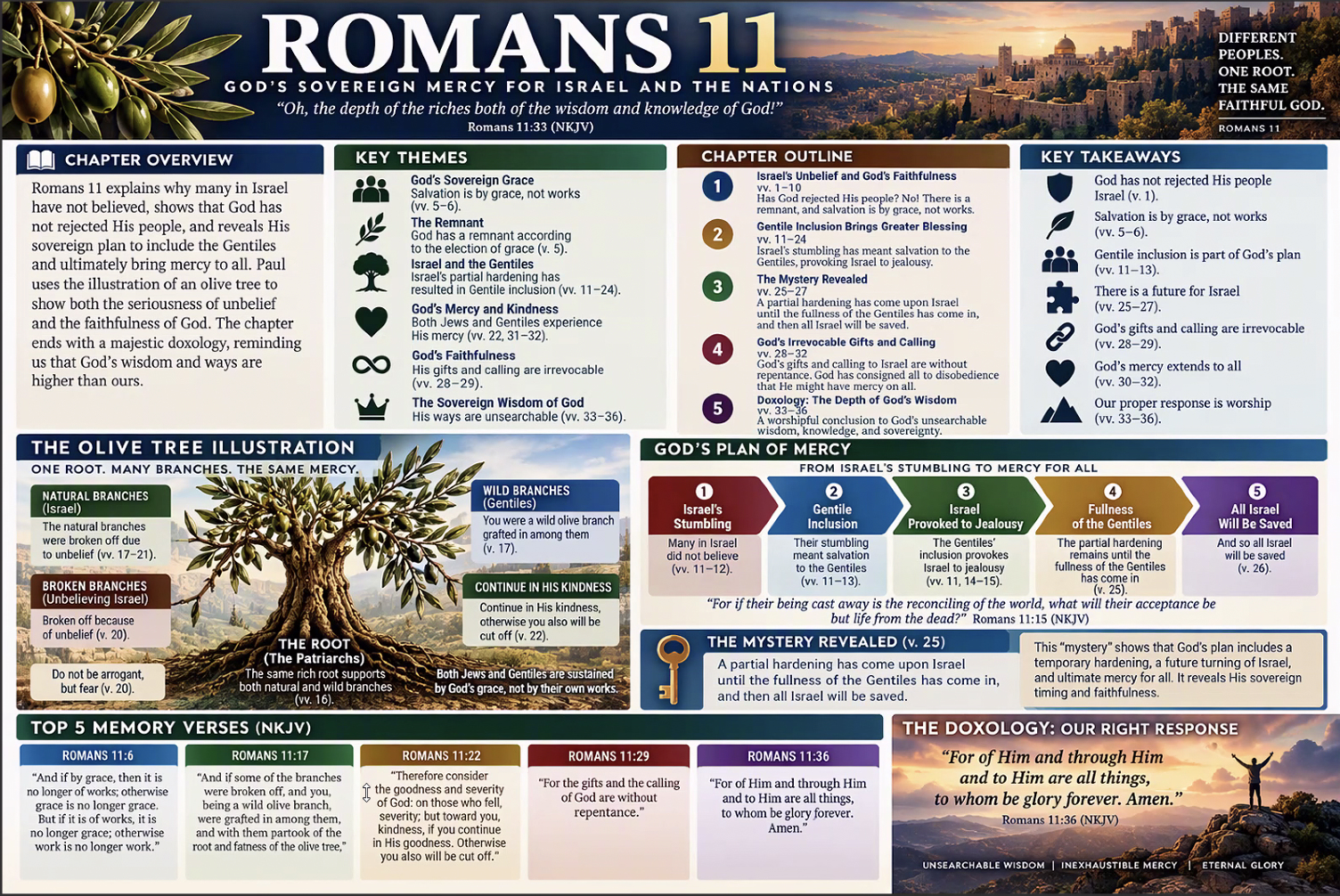
1. Romans 11: The Olive Tree, Spiritual Israel, and God’s Sovereign Grace
- Access to grace comes exclusively through faith in Jesus Christ and obedience to the gospel, not through lineage, works, or entitlement.
- The remnant consists of those who have believed and those who will believe; Israel experienced partial hardening until the fullness of the Gentiles enters God’s family.
- Gentiles, wild by nature, are grafted contrary to nature into the cultivated olive tree; natural branches (Israel) cut off due to unbelief can be grafted back if they do not persist in unbelief.
- Believers must consider both God’s goodness and severity: goodness toward those who continue faithfully, severity toward those who fall away.
- “All Israel will be saved” refers to spiritual Israel—Jews and Gentiles who obey the gospel and live faithfully—through deliverance from Zion (Christ), who removes sin in the New Covenant.
2. The Limitation of the Old Covenant vs. the Sufficiency of the New Covenant
- The Old Covenant lacked power to save, forgive sins, or grant resurrection and everlasting life; Hebrews 8:7 affirms the need for a New Covenant due to human failure to keep the terms.
- True justification and eternal life are found exclusively in the gospel of Jesus Christ; attempts to reach God apart from Christ are invalid.
- God’s gifts and callings are irrevocable, yet human disobedience can disqualify individuals or physical Israel from covenant benefits; the covenant is broken by man, not God.
3. Biblical Covenants, Conditions, and Modern Misinterpretations
- Genesis 12:1–3’s blessing and cursing promise was directed to Abram and is not an unconditional bloodline entitlement.
- Genesis 17 establishes land promise and circumcision with the prerequisite to “walk before me blameless”; Israel’s wilderness blessings (Numbers) still required upright walking before possessing the land.
- Scripture must be read as written: physical lineage cannot replace the covenant requirement of faithfulness and acceptance of the gospel; Hebrews 8 clarifies the transition to the New Covenant.
- Modern geopolitical justifications that twist Scripture stem from disregard of clear biblical teaching; God desires to extend mercy to all who turn from unbelief.
4. Historical Context, Spiritual Israel, and Adherence to the Word
- After Stephen’s death, the diaspora spread the gospel, but the absence of a compiled New Testament led to distortions; Paul’s letters (e.g., Romans, Hebrews) provided authoritative doctrinal clarity.
- True Jewishness is inward, a circumcision of the heart by the Spirit (Romans 2:28–29); the church constitutes spiritual Israel, fulfilling God’s promises to both Jews and grafted-in Gentiles.
- Competing influences—imperial pressure, idolatry, status, greed, and catering to itching ears—obstruct truth; strict adherence to the written Word is the safeguard against confusion.
- Believers must practice ongoing self-examination, acknowledging universal sin and living faithfully according to Scripture until death.