October 2026
Date Time: 2026-10-28 18:23:24 Location: SLCC Zoom Adult Bible Class Instructor: Brother Jon Pinkerton
Summary
The lecture series presents Romans 12 as a connected pattern for Christian life—offering oneself to God as a living sacrifice, undergoing mind renewal, discerning and doing God’s will, practicing humility, serving with diverse gifts, loving sincerely, and overcoming evil with good—then transitions into Romans 13’s guidance on civil authority, citizenship, and putting on Christ. Participants are urged to use God-given talents for ministry with diligence and cheerfulness; maintain sincere, agenda-free love; pray steadfastly, especially for others; meet practical needs; bless persecutors; pursue unity, humility, peace, and non-retaliation; and recognize that while gifts differ, the fruit of the Spirit forms a baseline for all believers. Romans 13 is framed through Romans 12’s lens: honor governing authorities as appointed by God while prioritizing obedience to God when civil mandates contradict His will, rendering to Caesar what is Caesar’s and to God what is God’s, and keeping an eternal focus over temporal politics. Jesus’s example in a corrupt Roman and compromised religious context underscores devotion to God, measured engagement with worldly powers, and holistic, Scripture-informed responses to modern issues (e.g., civil rights, immigration).
Knowledge Points
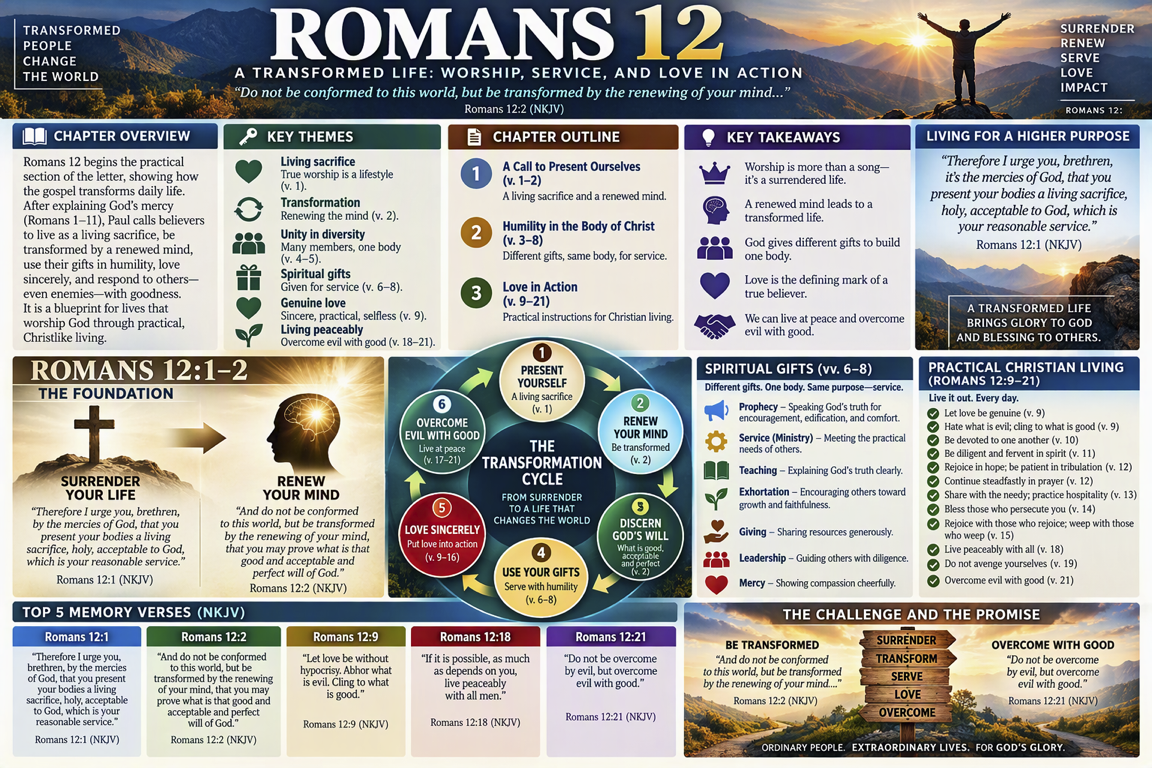
1. Transformation Cycle in Romans 12
- Present yourself to God as you are; God’s mercies cleanse and make you acceptable.
- Renew the mind by turning from worldly patterns, addressing biases and harmful thought habits, and filtering actions through Scripture; renewal is progressive.
- A renewed mind discerns what is good, acceptable, and perfect in God’s will; teachings should be tested by Scripture; growth includes repenting and being restored after shortcomings.
- Live the broader pattern: offer yourself, be transformed, become one together, use gifts, love sincerely, and refuse to be overcome by evil.
2. Humility, One Body, and Gifts
- Think soberly and humbly according to the measure of faith God gives; avoid self-exaltation, practice honest self-assessment.
- Many members, one body: believers belong to one another and should care for each other; different functions contribute to the community’s wholeness.
- Gifts given by grace are for service and ministry: prophecy in proportion to faith; teaching, exhortation, giving with liberality, leading with diligence, mercy with cheerfulness; gifts are to be used, not neglected.
3. Love Without Hypocrisy and Christian Character
- Love genuinely without hidden agendas; abhor evil and cling to good.
- Practice brotherly affection and honor others, preferring them above oneself.
- Be diligent, fervent in spirit, serving the Lord; rejoice in hope, be patient in tribulation.
- Continue steadfastly in prayer; prioritize intercession with practical methods (e.g., prayer lists).
- Distribute to the needs of saints; be hospitable and welcoming.
- Bless persecutors; rejoice with those who rejoice, weep with those who weep; maintain unity and avoid presumption; associate with the humble.
- Live as a “living sacrifice,” allowing transformed responses to replace learned worldly reactions.
- Do not retaliate; pursue peace as far as it depends on you; trust God’s justice; show kindness to enemies; overcome evil with good.
4. Baseline Virtues vs. Individual Gifts
- All believers should exhibit the fruit of the Spirit regardless of specific gifts; avoid using “that’s not my gift” to evade foundational Christian virtues.
- Gift surveys can help reflection and direction but must not restrict responsibility or excuse disobedience.
5. Transition to Romans 13: Citizenship and Readiness
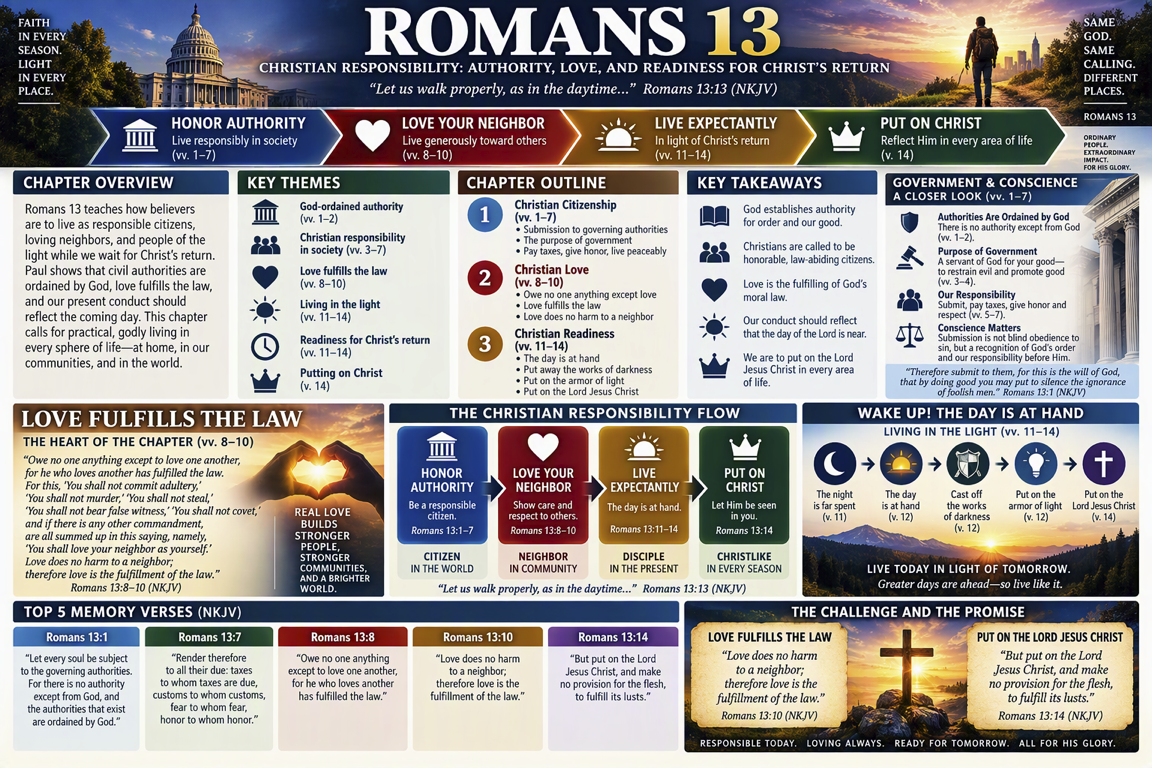
- Read Romans 12 and 13 integratively: surrender, love, humility, peace, and non-retaliation frame submission to authority.
- Governing authorities are under God’s sovereignty; respect civil structures while prioritizing God’s commands when conflicts arise (Acts references).
- Put on Christ, love your neighbor, live expectantly; read epistles in full to grasp structure and nuance.
- Respect what God allows while doing what He commands, navigating the fine line between civil submission and divine obedience.
6. Following Jesus’s Example in a Corrupt World
- Jesus, fully human and the Son of God, modeled faithful conduct amid evil Roman governance and corrupted religious leadership, focusing ministry on Israel and avoiding entanglement in political conflict.
- Believers need not bow to worldly dictates that oppose God; at times, shake off rejection and move on (“dust off your sandals”).
- Interpret submission passages holistically with Scripture; acknowledge God’s allowance of leaders’ choices and consequences; ground convictions in God’s commands.
- Render to God what belongs to God; keep primary allegiance to Him; maintain an eternal perspective over temporal political concerns.
Assignments
- Continue studying Romans 12; assess beliefs, thoughts, and actions by Scripture.
- Practice the process: present yourself to God, pursue ongoing renewal, and seek to discern and follow God’s will.
- Inventory and commit your spiritual gifts to service in the congregation (teaching, exhortation, giving, leading, mercy), ensuring cheerful and diligent practice.
- Create or update a written prayer list of congregation members, workers, and regular attendees; pray through it steadfastly before personal petitions.
- Identify and meet at least one practical need of a fellow saint this week (assistance, hospitality, teaching, or support).
- Practice love without hypocrisy: monitor post-worship speech and actions; refrain from negative talk; replace with prayer and affirmation.
- During election season, bless rather than curse those who oppose or persecute you; journal mindset shifts and outcomes; pursue peace as far as it depends on you.
- Publicly share a testimony of a recent blessing with the church family to encourage communal rejoicing.
- Study Romans 12 fully, then read Romans 13 in one sitting using the Romans 12 framework; note insights on honoring authority and loving neighbors.
- Review Galatians 5; self-assess fruit of the Spirit; set goals to cultivate baseline virtues regardless of specific gifts or office.
- Reflect on areas where civil expectations might conflict with God’s commands; prepare a biblical response plan prioritizing obedience to God.
- Read ahead in the Gospel of Mark for the upcoming class discussion on November 4, 2026.
- Transition immediately to the devotion session following the conclusion of class.